
CELPIP Speaking Task 8: Sample Answers and a 60-Second Strategy
The fastest way to answer an unusual situation is to describe the scene in a clear order, explain what makes it unexpected, and finish the role-play with a natural action.
Direct answer
What is CELPIP Speaking Task 8?
CELPIP Speaking Task 8 is Describing an Unusual Situation. You describe an unusual item or scene to someone who cannot see the picture. A strong response sounds like a short phone call: set the context, guide the listener through the picture, explain the surprising detail, and close the conversation.
The official CELPIP format gives you 30 seconds to prepare and 60 seconds to speak. The goal is not to name every object. The goal is to make the unusual situation easy to understand while keeping your answer organized and complete.
For the official timing and task name, check the CELPIP test format.
Timing
30s prep + 60s speaking
Focus
Scene + unusual detail + action
Use this order
A reliable 60-second structure
Set the scene
Say where you are, who you are calling, and what you can see first.
Describe the main subject
Use location words, shape, colour, position, and simple concrete details.
Explain what is unusual
Show the contrast between the normal setting and the surprising object or action.
React and close
Say what you would do next, ask for advice if appropriate, and finish the call.
Flexible language
Task 8 phrases that sound natural
Start the call
“Hi, you will not believe what I am looking at right now.”
Locate details
“In the centre of the picture, I can see...”
Show contrast
“The unusual part is that...”
Explain your reaction
“At first, I thought it was..., but then I noticed...”
Suggest an action
“Next, I would check..., make sure..., and...”
Finish naturally
“I will send you a photo later. Talk to you soon.”
Treat this as a framework, not a speech to memorize. Keep the order, but change the nouns, locations, reactions, and action to match the picture.
Sample answer
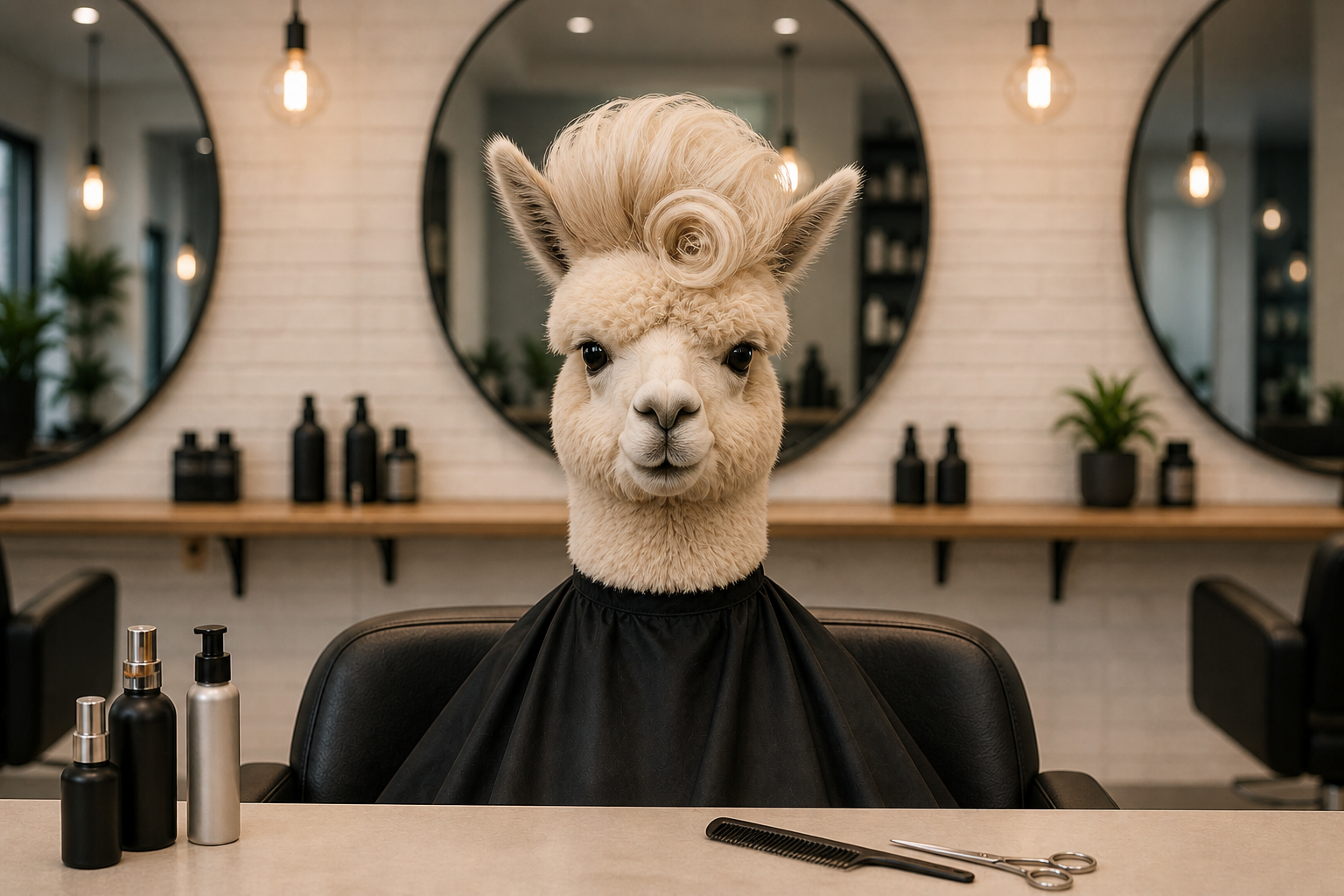
An alpaca at a hair salon
Hi, you would not believe what I am seeing at this hair salon right now. In the centre, there is an alpaca sitting alone in a barber chair and wearing a black salon cape. It has a huge, carefully styled tuft of wool on top of its head, including a dramatic curl above its forehead.
The alpaca looks completely calm, as if this were a normal appointment. Around it, I can see large round mirrors, warm hanging lights, bottles on the shelves, and a comb and scissors on the counter. Everything looks like a normal modern salon, which makes the alpaca even more surprising.
I am not sure whether this is a real grooming appointment, a promotional event, or an artistic display. Next, I would ask the staff whether the alpaca is comfortable and whether I may take a photo. Then I would tell you about this bizarre experience.
Avoid these traps
Why Task 8 answers lose clarity
Random listing
Naming objects without explaining where they are or why they matter makes the listener work too hard.
No unusual point
A normal description is not enough. Clearly say what is unexpected, funny, confusing, or out of place.
No ending
Do not stop after the description. Add a reaction, a practical next step, or a short closing line.
Quick answers
CELPIP Speaking Task 8 FAQ
What is CELPIP Speaking Task 8?
CELPIP Speaking Task 8 is Describing an Unusual Situation. You describe an unusual item or scene to someone who cannot see the picture, then finish the role-play naturally.
How much time do I get for CELPIP Speaking Task 8?
The official format gives you 30 seconds to prepare and 60 seconds to speak. Use the preparation time to choose the setting, the most unusual details, and your closing action.
Do I need to describe every object in the picture?
No. Choose the details that explain the unusual situation and help the listener visualize it. A clear description of a few important details is better than a rushed list of everything.
Should I memorize a CELPIP Speaking Task 8 template?
Use a flexible structure, not a memorized speech. Reusable openings, location phrases, reactions, and closing lines help you organize a new picture without sounding copied.
What should I do if I do not know the exact word?
Describe the object with familiar words. For example, you can say “a large animal with thick, soft wool” if you cannot remember the word “alpaca.” Clear meaning is more useful than stopping to search for one perfect word.
Turn the structure into a habit
Record several different pictures, review your organization and timing, then repeat the answer with clearer details instead of memorizing one perfect script.