
Open clearly
Make your position clear in the first sentence.
- If I were in this situation, I would start by...
- The most practical option would be...
- I can understand why this is frustrating, but...
Loading...
Use these lines to open faster, connect ideas, recover from pauses, and sound organized in every CELPIP Speaking task.
Short answer: use one clear opening, one reason, one example, and one closing line to keep your response organized.

Before you record
Choose your idea, then build it.
Reusable lines
Use one move at a time. These sentence frames help you stay organized while your own ideas do the real work.
Make your position clear in the first sentence.
Develop the idea with a reason and a result.
Connect ideas without sounding memorized.
Keep speaking when you need a second to think.
Practise

Task 1
Ready to start
1:00
Task map
Use the move first, then fill it with your own details. This keeps answers organized without sounding robotic.
Give advice
Offer two practical suggestions and explain why each one helps.

Describe a scene
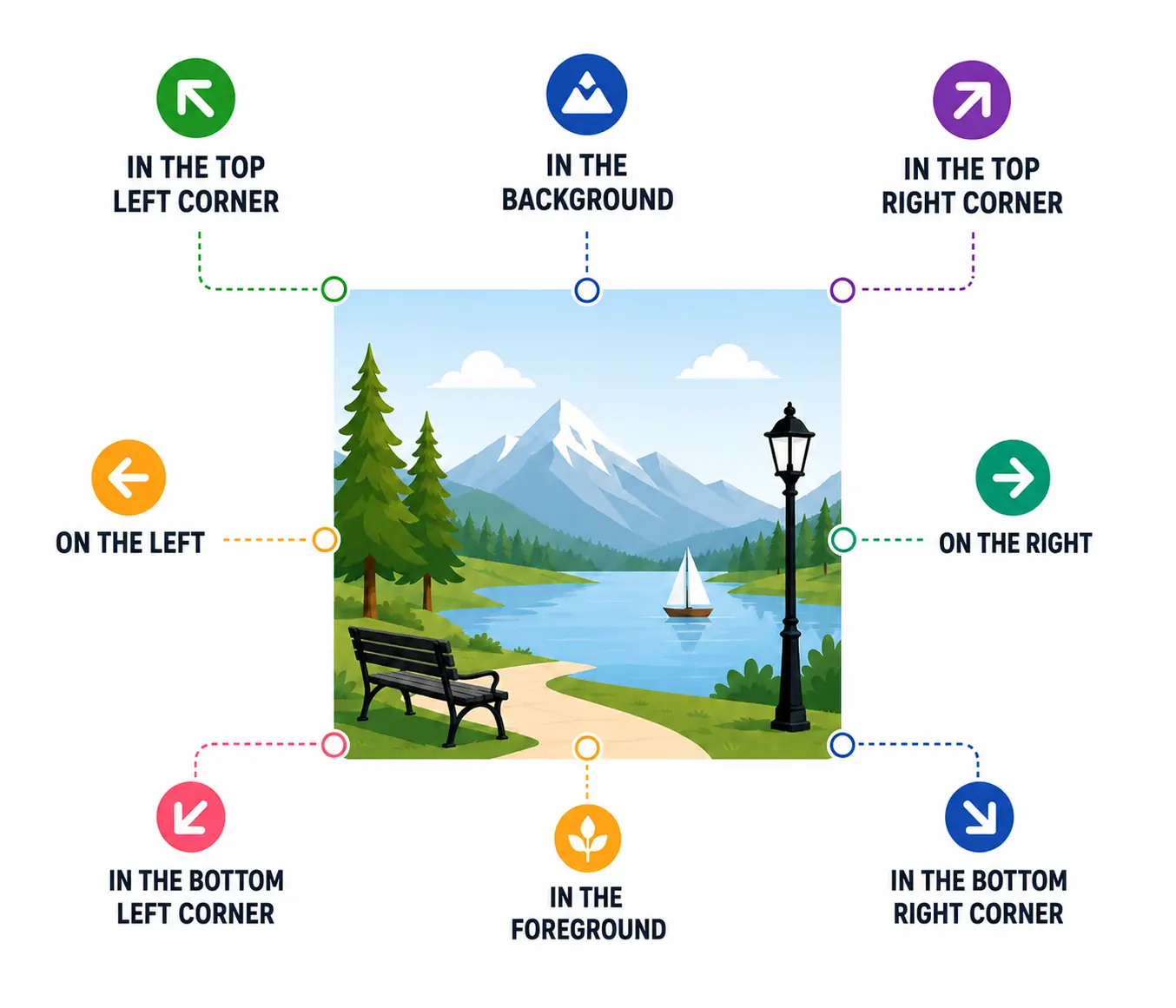
Move from the big picture to people, actions, and locations.

Express an opinion
State your position, support it with reasons, and close clearly.
Task 1
Giving Advice
Give 2 practical suggestions, explain why each one helps, then end with a friendly final recommendation.
Task 2
Personal Experience
Tell a short story in past tense: situation, action, result, and what you learned.
Task 3
Describe a Scene
Move from big picture to details: place, people, actions, location words, and one unusual detail.
Task 4
Prediction
Choose one likely outcome, support it with visual evidence, and add what might happen after that.
Task 5
Compare and Persuade
Pick one option quickly, compare it against the others, then persuade with cost, convenience, and fit.
Task 6
Difficult Situation
Acknowledge the problem, choose a side, explain the tradeoff, and offer a respectful solution.
Task 7
Opinion
State your opinion, give two reasons, add a real-life example, and close with a clear conclusion.
Task 8
Unusual Situation
Describe what you see, explain why it is strange, say what you will do next, and keep calm.
Pick a Speaking question, record once, and use the structure above to improve your response.
Follow the Speaking Marathon with 3 speaking topics daily plus Reading Vocabulary with 10 reading phrases each day. You get structure, repetition, and a clear routine instead of random practice.
FAQ
Direct answers for CELPIP Speaking structure, phrases, timing, and task strategy.
The best CELPIP Speaking structure is opening, reason, example, and closing. Start with a direct answer, add one or two clear reasons, include a specific detail, and finish with a short conclusion.
Yes, you can use short memorized phrases in CELPIP Speaking, but you should not memorize full answers. Use phrases as flexible sentence starters, then add your own details for the exact question.
Practise CELPIP Speaking phrases by using one prompt, one timer, and one target phrase at a time. Record a 60-second answer, listen once, and check whether your idea, support, and ending were clear.
You can use the same basic structure for all 8 CELPIP Speaking tasks, but the content must match the task. For example, Task 1 needs advice, Task 3 needs visible picture details, and Task 7 needs an opinion with reasons.
If you forget a word during CELPIP Speaking, keep talking and explain the idea with simpler words. Use a repair phrase such as “Let me put it another way” instead of stopping for a long pause.
A CELPIP Speaking answer should fill most of the speaking time without rushing. Aim for a complete response with a clear opening, enough support, and a short ending rather than speaking too fast.